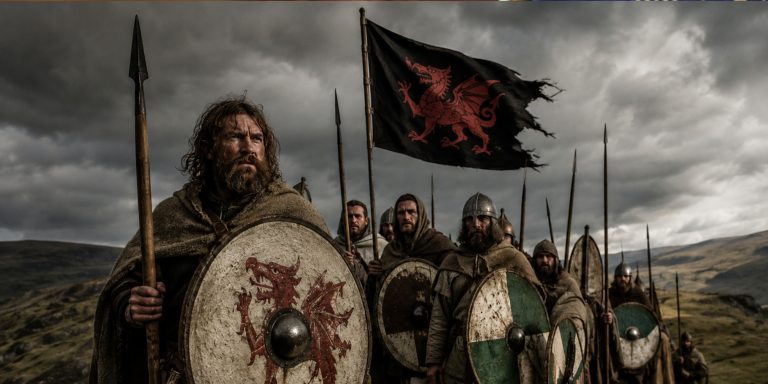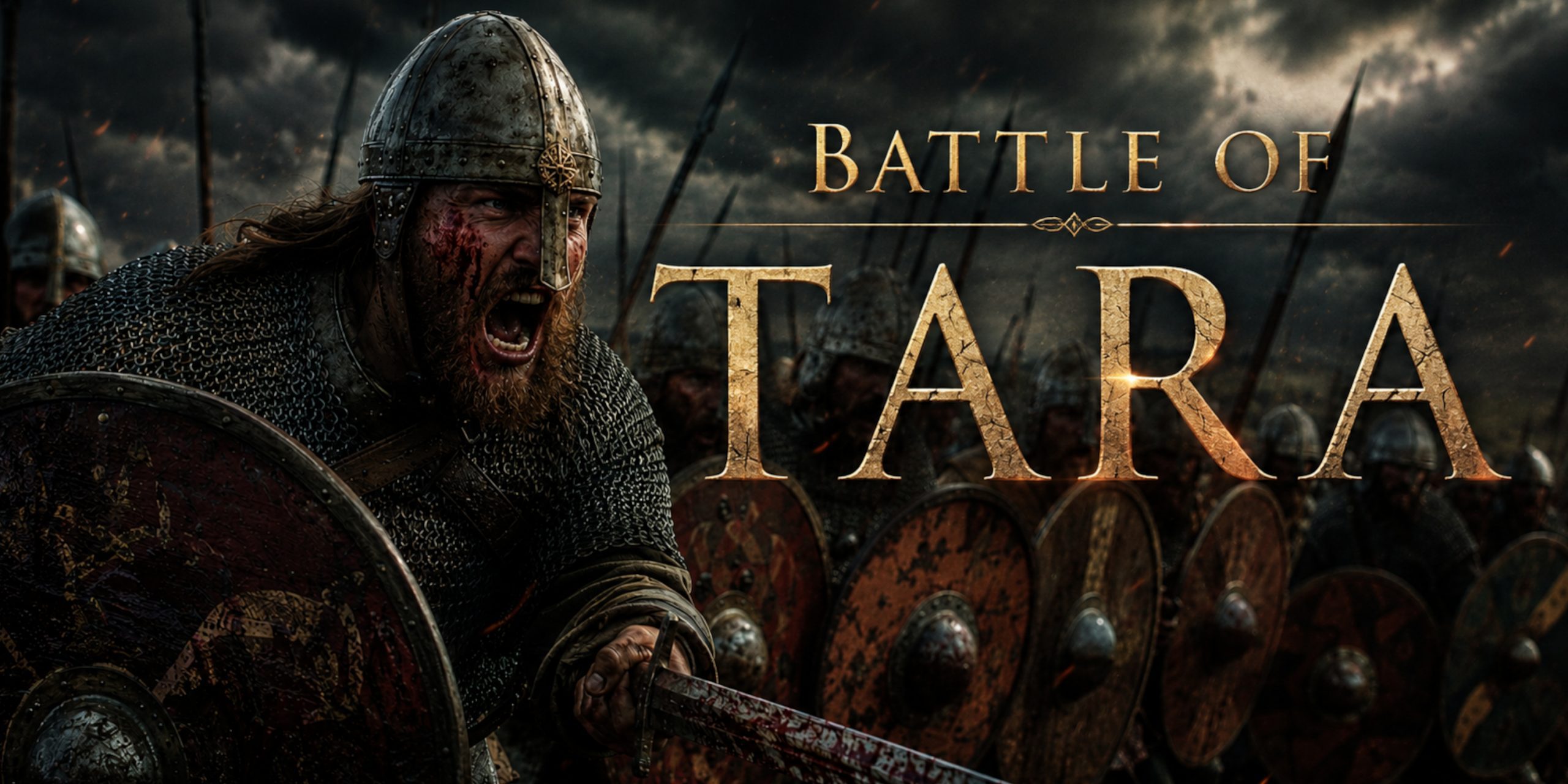
The Battle of Tara in 980 AD was one of the most important clashes between the Gaelic kingdoms of Ireland and the Norse-Gaelic power of Dublin. Fought near the ancient royal landscape of Tara in County Meath, it saw the forces of Máel Sechnaill mac Domnaill of the Southern Uí Néill defeat the army of Amlaíb Cuarán, the Viking king of Dublin and York.
This was not just an Irish versus Viking encounter. By the late 10th century Ireland was a complicated world of alliances, rivalries and political ambition. Dublin’s Norse rulers were no longer outsiders arriving in longships. They were deeply involved in Irish politics, trade and warfare.
The Battle of Tara shattered Dublin’s dominance and allowed Máel Sechnaill to claim greater authority across Ireland. For a brief moment, before the rise of Brian Boru, he stood as the strongest ruler on the island.
As usual in medieval Irish politics, peace lasted roughly as long as everyone needed to sharpen their swords again.
Historical Background: Ireland Before the Battle
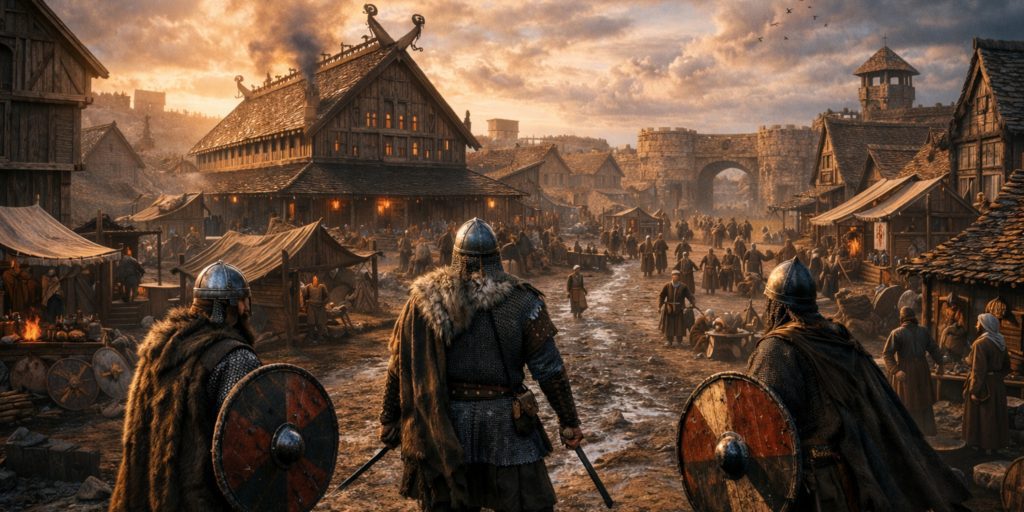
By the late 900s, Dublin had become one of the richest Viking settlements in western Europe. Its position gave it control over trade routes linking Ireland with Britain, Scandinavia and continental Europe.
Amlaíb Cuarán had built a formidable reputation. He had ruled in Northumbria, fought in Britain and returned to Dublin as one of the most experienced Norse rulers of his age.
Máel Sechnaill mac Domnaill, king of Mide, represented the power of the Southern Uí Néill. His ambition was to restore dominance over central Ireland and weaken Dublin’s influence.
The immediate causes included:
- Competition for control of Leinster and eastern Ireland
- Viking raids into Gaelic territories
- Rival claims of overlordship
- Control of wealth, tribute and political prestige
The battlefield chosen was symbolically powerful. Tara was associated with ancient Irish kingship, making victory there valuable far beyond military success.
Forces at the Battle of Tara
Exact numbers are unknown. Medieval Irish sources often cared more about honour and dramatic storytelling than providing neat battlefield spreadsheets. Modern estimates rely on comparisons with similar Viking Age armies.
| Army | Commander | Estimated Strength | Composition |
|---|---|---|---|
| Kingdom of Mide and Irish allies | Máel Sechnaill mac Domnaill | Possibly several thousand warriors | Gaelic infantry, nobles, household warriors, light troops |
| Norse-Gaelic Dublin | Amlaíb Cuarán | Possibly several thousand warriors | Viking-style infantry, Norse-Gaelic warriors, Dublin retainers, allies |
Leaders and Troop Composition
Gaelic Irish Army
Commander: Máel Sechnaill mac Domnaill
Troops likely included:
- Household warriors loyal to the king
- Noble warrior elites
- Spearmen forming the main infantry force
- Lightly equipped skirmishers
- Allied warriors from neighbouring territories
Strengths:
- Excellent knowledge of terrain
- Flexible fighting style
- Strong regional support
- Experienced commanders familiar with Viking tactics
Weaknesses:
- Less standardised equipment
- Political divisions between Irish kingdoms
- Reliance on personal loyalty rather than a permanent army
Norse-Gaelic Dublin Army
Commander: Amlaíb Cuarán
Troops likely included:
- Professional Viking-style warriors
- Dublin’s elite household fighters
- Hiberno-Norse infantry
- Allied Irish forces
Strengths:
- Experienced heavy infantry
- Strong martial tradition
- Access to imported weapons and armour
- Veterans from warfare across Britain and Ireland
Weaknesses:
- Dependent on maintaining alliances
- Vulnerable if forced into unfavourable ground
- Defeat threatened Dublin’s political authority
Arms and Armour at the Battle of Tara
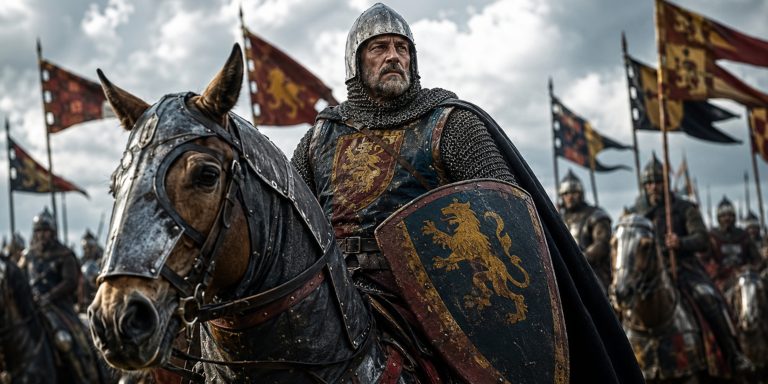
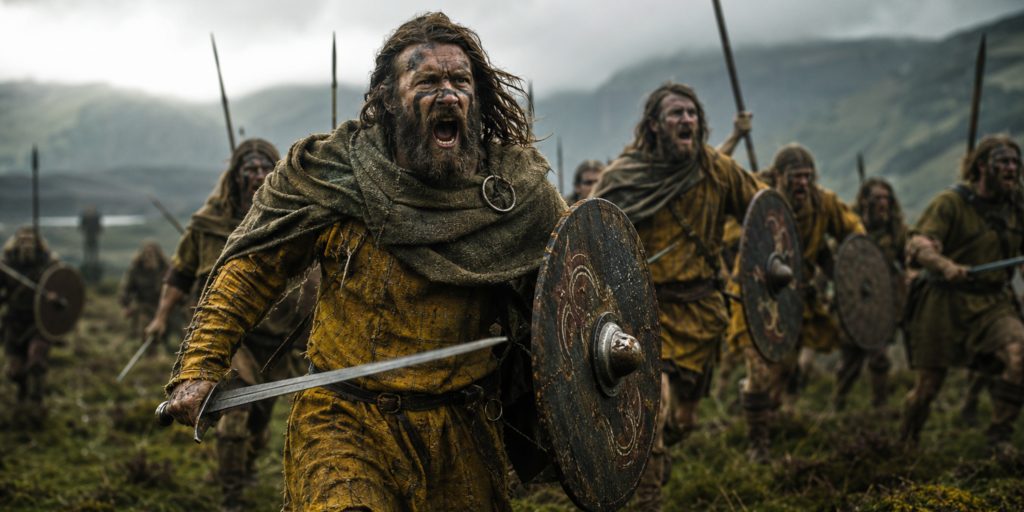
The warriors who fought at Tara belonged to the Viking Age military world. Equipment varied greatly depending on wealth and status.
Gaelic Irish Weapons
Swords
High-status Irish warriors used expensive iron and steel swords, many influenced by wider Viking Age designs.
Common sword types included:
- One of the most widespread sword forms of the 9th and 10th centuries
- Broad double-edged blade
- Short guard and distinctive lobed pommel
- Designed for powerful cutting strikes
Viking Type K Sword
- Popular across Ireland and Scandinavia
- Often decorated among elite warriors
- Found through archaeological discoveries in Irish contexts
Native Irish Ring-Pommel Influenced Swords
Earlier Irish sword traditions included distinctive ring-pommel designs. By Tara’s period these were less common but influenced local weapon culture.
Other weapons:
- Spears, the most common battlefield weapon
- Javelins for skirmishing
- Axes
- Long knives and utility blades
Armour:
- Shields of wood covered with leather
- Iron helmets among wealthy warriors
- Mail shirts among elites
- Padded clothing among ordinary fighters
Norse-Gaelic Weapons
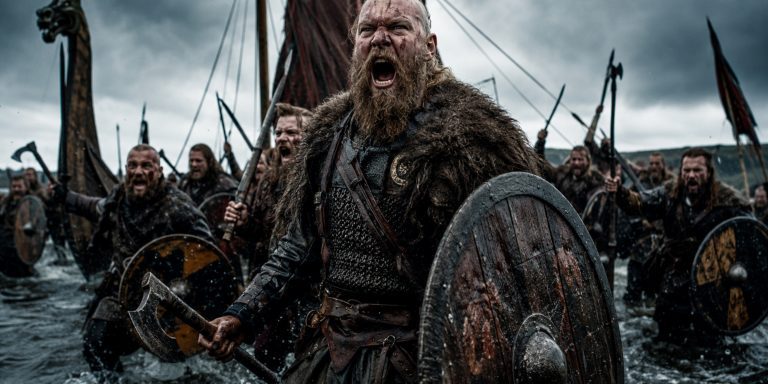
Dublin’s warriors followed Scandinavian military traditions while adapting to Ireland.
Common weapons included:
Viking Swords
Types likely present:
- Petersen Type H swords
- Petersen Type K swords
- Petersen Type X swords
Characteristics:
- Double-edged blades around 70 to 90 cm
- Pattern-welded examples among elite warriors
- Designed for use alongside a shield
Other weapons:
- Dane axes among specialist fighters
- Spears
- Throwing weapons
- Seaxes and fighting knives
Armour:
- Riveted mail armour
- Conical helmets
- Round shields with iron bosses
- Heavy wool and leather protective clothing
A wealthy Dublin warrior would have looked very similar to warriors fighting in England or Scandinavia. The idea of a wildly different “Viking costume” belongs more to television departments than archaeology.
Battle Timeline
| Date/Stage | Event |
| Before 980 | Rising conflict develops between Dublin and Máel Sechnaill’s kingdom |
| Early campaign | Máel Sechnaill challenges Norse-Gaelic power in eastern Ireland |
| Battle begins | The armies meet near Tara in County Meath |
| Main fighting | Heavy infantry combat dominates the engagement |
| Gaelic breakthrough | Máel Sechnaill’s forces defeat the Dublin army |
| Aftermath | Dublin loses military dominance and Amlaíb Cuarán leaves political life |
The Battle
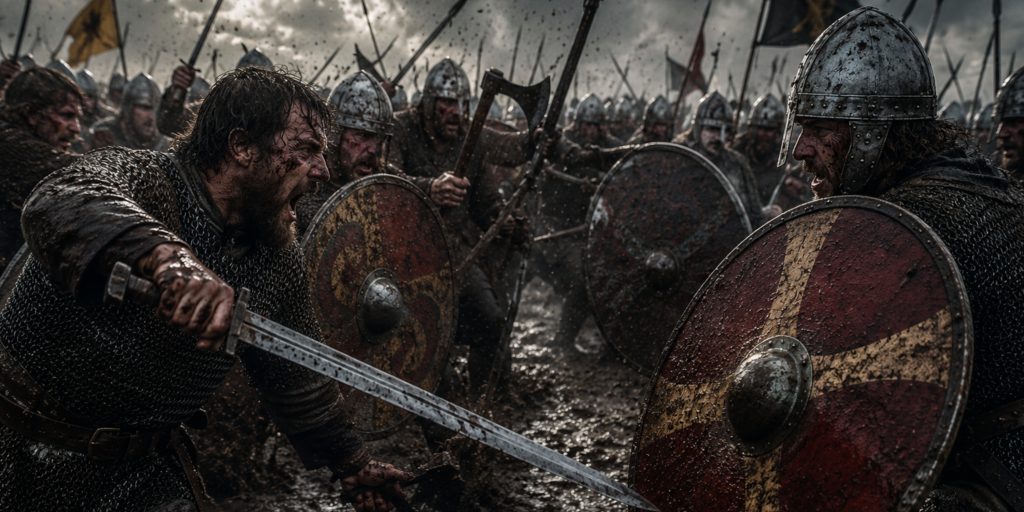
Precise tactical details are limited. The surviving sources focus on outcome rather than formations and battlefield movements.
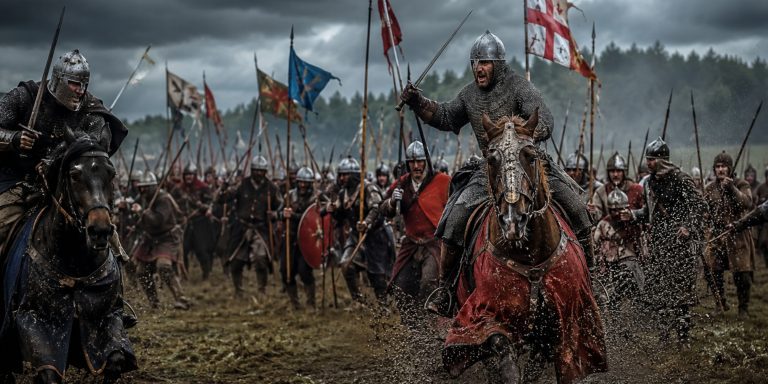
The fighting was probably centred around shield walls and close infantry combat. Viking Age battles were brutal contests of endurance, where maintaining formation mattered as much as individual skill.
Máel Sechnaill’s forces achieved a decisive victory. The defeat was severe enough that Amlaíb Cuarán abdicated and retired to the monastery at Iona, where he died shortly afterwards.
The victory allowed Máel Sechnaill to enter Dublin and impose his authority over the city.
Contemporary Sources and Quotes
The main written evidence comes from medieval Irish annals.
The Annals of Ulster record the battle and describe the defeat of Dublin’s forces:
“A great slaughter of the foreigners was inflicted.”
The term “foreigners” was commonly used in Irish sources for Norse and Norse-Gaelic groups, although by this period many Dublin Vikings had lived in Ireland for generations.
The Annals of the Four Masters later recorded Máel Sechnaill’s success and emphasised the political importance of the victory.
These sources should be treated carefully. Medieval chroniclers were not neutral battlefield journalists. They wrote with political, religious and regional viewpoints.
Archaeology of the Battle of Tara
No confirmed battlefield archaeology has identified the exact location of the fighting.
However, wider Viking Age archaeology from Ireland gives valuable insight into the warriors involved.
Important evidence includes:
Dublin Excavations
Archaeology around Viking Dublin has uncovered:
- Weapons
- Craft workshops
- Imported goods
- Defensive structures
- Evidence of extensive international trade
The finds show Dublin was not simply a raiding base. It was a sophisticated urban centre with connections stretching across Europe.
Viking Age Weapons Found in Ireland
Discoveries include:
- Viking swords from rivers and burials
- Spearheads
- Axe heads
- Shield fittings
- Metalwork showing Scandinavian and Irish artistic influences
These objects reveal the blended culture of 10th-century Ireland, where a Norse warrior might carry Irish-made equipment and an Irish noble might own a Scandinavian sword.
History rarely stays inside neat labels.
Aftermath and Consequences
The Battle of Tara changed Irish politics.
Key outcomes:
- Dublin’s military power was weakened
- Máel Sechnaill became the dominant Irish ruler
- Amlaíb Cuarán’s reign ended
- Gaelic influence over Dublin increased
- The balance of power shifted before the rise of Brian Boru
However, Dublin remained important. The city continued to be a major economic and political centre.
The battle did not end Viking influence in Ireland. Instead, it marked the transition from Viking conquest and raiding into a more integrated Norse-Gaelic world.
Legacy of the Battle of Tara
The Battle of Tara deserves more attention than it often receives. It lacked the dramatic fame of Clontarf in 1014, but its consequences were enormous.
It proved that Dublin’s Viking rulers could be defeated, strengthened Máel Sechnaill’s claim to wider authority and reshaped Ireland’s political landscape.
It was not a simple clash between two cultures. It was a battle between rulers competing for power in a world where Gaelic and Norse traditions had already begun to merge.
The warriors at Tara were not fighting over whether Vikings belonged in Ireland. By 980, they already did. They were fighting over who would control the future.